
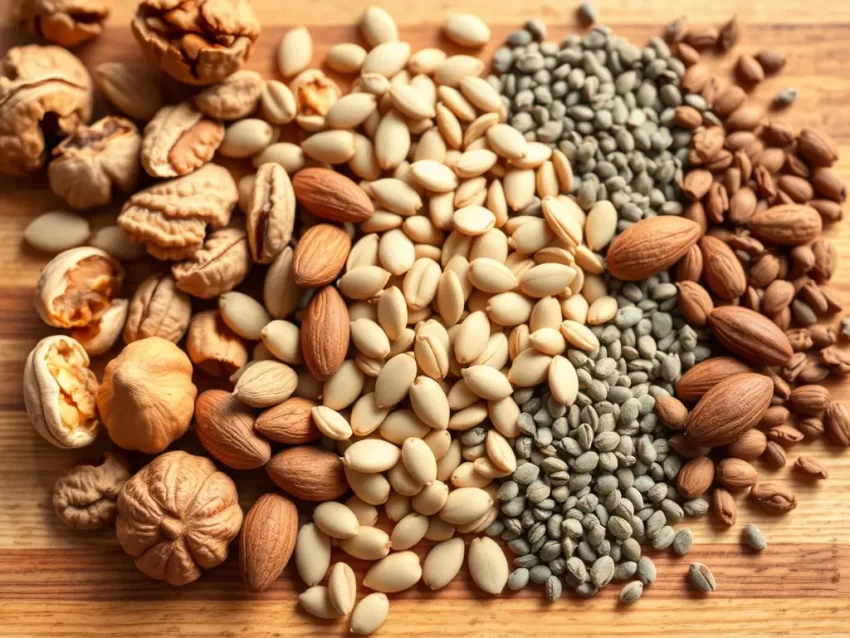
When it comes to protecting your heart, small daily habits matter. One of the simplest changes? Eating nuts and seeds. These nutrient-dense foods are packed with healthy fats, plant protein, fiber, vitamins, and minerals that reduce inflammation, balance cholesterol, and support strong circulation.
Studies show that eating nuts at least four times per week lowers your risk of heart disease by up to 37%. 🌟 That’s a massive benefit from such a simple habit.
Below you’ll find 7 everyday nuts and seeds that go beyond simple snacking — plus practical tips for enjoying them, a nutrition comparison chart, and answers to common questions.
1. Walnuts
Walnuts are one of the best plant-based sources of omega-3 fatty acids (ALA). These heart-healthy fats help reduce inflammation, prevent plaque buildup, and improve artery elasticity.
👉 Pro Tip: A handful (1 oz, about 14 halves) per day is ideal. Chop walnuts into salads, sprinkle them over oatmeal, or blend into pesto.
2. Almonds
Almonds are rich in vitamin E, a fat-soluble antioxidant that protects blood vessels from oxidative damage. They’re also high in magnesium, which supports normal blood pressure.
👉 Best Way to Eat: Choose raw or dry-roasted almonds without added oils. Almond milk and almond butter are also heart-healthy swaps.
3. Chia Seeds
Tiny but powerful, chia seeds absorb liquid and form a gel that slows digestion, stabilizes blood sugar, and supports gut health. They’re also loaded with omega-3s and soluble fiber, both proven to reduce cholesterol.
👉 How to Use: Stir into yogurt, smoothies, or overnight oats. For a fun twist, make chia pudding.
4. Sunflower Seeds
Sunflower seeds deliver vitamin E, selenium, and magnesium — a triple combo for heart health. They reduce oxidative stress, relax blood vessels, and support immunity.
👉 Snack Idea: Sprinkle them over salads or roasted veggies. Opt for unsalted to avoid excess sodium.
5. Flaxseeds
Flaxseeds are one of the richest plant sources of lignans and omega-3s. Lignans are unique plant compounds that lower cholesterol and balance hormone levels, while omega-3s protect arteries.
👉 Important: Always grind flaxseeds for proper absorption. Whole seeds often pass through undigested.
6. Pumpkin Seeds
Also called pepitas, pumpkin seeds provide zinc, magnesium, and heart-healthy fats. Magnesium plays a key role in a steady heart rhythm, while zinc supports immunity.
👉 Snack Idea: Roast with a sprinkle of sea salt, or add to homemade trail mix.
Need more magnesium than pumpkin seeds can offer? Try Magnesium Glycinate by Nutritional Frontiers. Use code #44945 for discounts.
7. Pecans
Pecans are rich in antioxidants and monounsaturated fats, which reduce oxidative stress and inflammation in arteries. Regular consumption has been shown to improve cholesterol ratios.
👉 Tasty Tip: Add chopped pecans to oatmeal, Greek yogurt, or a salad for a nutty crunch.
Nutrition Comparison Chart
| Nut/Seed (1 oz) | Calories | Protein | Fiber | Omega-3 (ALA) | Magnesium (mg) | Vitamin E (mg) |
|---|---|---|---|---|---|---|
| Walnuts | 185 | 4g | 2g | 2,570 mg | 45 | 0.7 |
| Almonds | 161 | 6g | 3.5g | 0 | 76 | 7.3 |
| Chia Seeds | 137 | 4g | 10g | 5,055 mg | 95 | 0.5 |
| Sunflower Seeds | 165 | 5.5g | 3g | 0 | 91 | 10 |
| Flaxseeds | 150 | 5g | 8g | 6,388 mg | 111 | 0.2 |
| Pumpkin Seeds | 151 | 7g | 1.7g | 0 | 168 | 0.1 |
| Pecans | 196 | 3g | 2.7g | 280 mg | 34 | 0.4 |
FAQ: Nuts, Seeds & Heart Health
Q: Do nuts cause weight gain?
A: Research shows nuts actually support weight management. Their healthy fats and fiber keep you full, reducing cravings for processed snacks.
Q: How many nuts should I eat daily?
A: A small handful (about 1 oz) is ideal for most adults. More isn’t always better — balance is key.
Q: What’s better: raw, roasted, or salted nuts?
A: Raw or lightly dry-roasted nuts preserve the most nutrients. Avoid heavily salted or oil-fried nuts.
Q: Can nuts lower cholesterol?
A: Yes. Walnuts, almonds, and flaxseed are especially effective for lowering LDL (“bad”) cholesterol while maintaining HDL (“good”) cholesterol.
Q: Are seeds as good as nuts for heart health?
A: Absolutely. Chia, flax, and pumpkin seeds deliver omega-3s, fiber, and minerals that rival — or even exceed — many nuts.
Q: Should I take nut or seed oils instead?
A: Whole foods are best since they provide fiber and antioxidants. Oils can supplement, but stick to cold-pressed varieties and use sparingly.
How to Add More Nuts & Seeds to Your Day
Adding nuts and seeds to your diet doesn’t have to be complicated. Here’s a simple step-by-step method you can follow every day:
- Pick one daily serving — Aim for about 1 oz of nuts (a small handful) or 2 tablespoons of seeds.
- Choose your base — Use everyday foods like oatmeal, yogurt, salads, smoothies, or homemade trail mix.
- Add your mix-in — Sprinkle your serving of nuts or seeds onto the base. Walnuts on salads, chia in smoothies, or ground flax on oatmeal work perfectly.
- Swap one snack — Replace a processed snack (chips, candy, cookies) with a handful of almonds, pecans, or sunflower seeds.
- Store smart — Keep nuts and seeds in an airtight jar in a cool, dark place. Grind flaxseed fresh or store ground flax in the fridge.
💡 Tip: Rotate varieties each week (walnuts → almonds → pecans) to maximize nutrients.
Final Takeaway
Nuts and seeds are simple, affordable superfoods that deliver big cardiovascular benefits. By swapping processed snacks for a small handful of almonds, chia pudding, or pumpkin seeds, you can improve cholesterol, reduce inflammation, and keep your heart strong for years to come.
Start today with one heart-healthy swap — your arteries will thank you.